

 Ashar Pervaiz
The Ultimate Guide to IV Infusion Calculations: Formulas, Drip Rates, and Dosages
What is an IV Infusion Calculator?
An IV infusion calculator is a critical medical tool used by healthcare professionals to determine the exact rate, volume, and dosage of intravenous fluids or medications. By using specific formulas like the ml hr formula and the drip rate formula, medical staff can ensure safe patient care. Whether calculating simple fluid resuscitation or complex microgram-per-kilogram-per-minute (mcg/kg/min) titrations, accuracy in an iv therapy calculator prevents medication errors and saves lives.
Introduction to IV Therapy and Infusion Calculations
Intravenous (IV) therapy is a foundational element of modern global medicine. From emergency rooms in the United States to intensive care units in the UK, Europe, and Asia, administering fluids and medications directly into a patient's bloodstream is the fastest way to achieve systemic effects. However, this speed comes with profound responsibility. A minor mathematical error can lead to severe clinical consequences.
This is exactly where an accurate iv therapy calculator becomes indispensable. Whether you are a seasoned ICU nurse, a paramedic in the field, a doctor prescribing complex chemotherapy, or a medical student preparing for pharmacological exams, mastering the math behind the medicine is non-negotiable.
In this comprehensive guide, we will break down everything from basic drip rate calculator formulas to advanced infusion dose calculator methodologies. We will explore global standards, provide step-by-step clinical examples, and equip you with the knowledge to safely calculate and administer IV medications.
Want to skip the manual math? Try our interactive IV Infusion Calculator and Dose Calculator directly on Numbers on Your Tip.
1. Body Weight Dose Calculation (mg/kg)
Weight-based dosing is the gold standard for pediatric patients worldwide and is increasingly used for specific high-risk medications in adults (such as critical care vasoactive drugs and oncology medications). Because every patient metabolizes drugs differently based on their size, calculating the dose per kilogram of body weight ensures therapeutic efficacy while minimizing toxicity.
The Core Formula
Patient Dose = Patient Weight (kg) × Ordered Dose (mg/kg)
Understanding mg/kg and mcg/kg/min
While standard ward medications might use simple milligrams per kilogram (mg/kg), intensive care settings often require a mcg kg min calculator. This means you are calculating micrograms of the drug, per kilogram of the patient's body weight, delivered every single minute. It is one of the most complex drug calculation formulas for infusion.
Real-Life Clinical Examples
Example A: Pediatric Antibiotic (Simple)
- Scenario: A doctor orders Amoxicillin for a child weighing 44 lbs. The dose is 15 mg/kg.
- Step 1 (Convert lbs to kg): 44 lbs ÷ 2.2 = 20 kg. (Global tip: Always use kg in medical calculations!)
- Step 2 (Calculate Dose): 20 kg × 15 mg/kg = 300 mg.
Example B: Adult Emergency Medication (Complex)
- Scenario: A 70 kg adult patient needs a Dopamine infusion. The order is 5 mcg/kg/min.
- Step 1: Calculate total micrograms per minute: 70 kg × 5 mcg = 350 mcg/min.
- Step 2: This result must then be cross-referenced with the medication concentration to determine the final iv infusion rate calculator settings on the pump.
Safety Consideration: Always ensure the patient's weight is current. Relying on estimated weights or outdated records is a leading cause of dosing errors globally.
2. IV Drip Rate Calculation (Drops Per Minute / gtt/min)
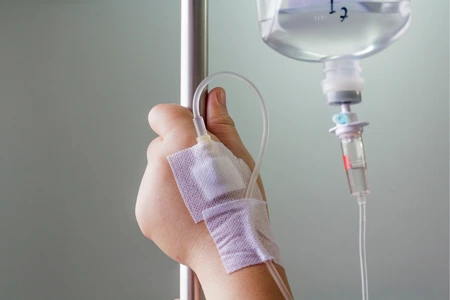
In many parts of the world, especially in pre-hospital settings, field medicine, or hospitals without an abundance of electronic volumetric pumps, gravity infusions are heavily utilized. To control a gravity infusion, healthcare providers must calculate the manual drip rate. This requires a reliable iv drip rate calculator formula.
What is the Drop Factor (gtt/mL)?
The drop factor is the number of drops (gtt) it takes to make up one milliliter (1 mL) of fluid. This depends entirely on the physical IV tubing set you are using. You must look at the packaging of the IV line to find the drop factor equation variables.
- Macrodrip Sets: Typically deliver large drops. Common factors are 10 gtt/mL, 15 gtt/mL, or 20 gtt/mL. Used for rapid fluid resuscitation, blood transfusions, and routine hydration.
- Microdrip Sets: Typically deliver tiny drops, universally calibrated at 60 gtt/mL. Often used for pediatric patients or precise medication drips.
The Drip Rate Formula
Drip Rate (gtt/min) = (Total Volume (mL) × Drop Factor (gtt/mL)) / Total Time (minutes)
How to Calculate gtt min: Step-by-Step Examples
Example: Routine Fluid Resuscitation
- Order: Administer 1,000 mL of Normal Saline (0.9% NaCl) over 8 hours.
- Equipment: The tubing packaging states a drop factor of 15 gtt/mL.
- Step 1: Convert hours to minutes using the infusion time formula (8 hours × 60 = 480 minutes).
- Step 2: Apply the drops per minute formula.
- Calculation: (1,000 mL × 15 gtt/mL) / 480 mins = 15,000 / 480 = 31.25.
- Result: Because you cannot count a fraction of a drop, you round to 31 gtt/min.
Learning how to calculate drip rate manually is a vital skill. By knowing your gtt formula, you can ensure your patient receives the exact prescribed therapy even in the event of a power outage or pump failure.
3. Dose from Vial Calculation (Liquid Concentration)
Medications are rarely supplied in the exact dose prescribed. They often come in vials with a specific concentration (e.g., 500 mg in 10 mL). You must figure out how many milliliters of liquid to draw up in your syringe to get the correct milligram dose. This is where an infusion dose calculator logic applies.
The Universal Formula (Desired over Have)
Volume to Administer = (Desired Dose / Have Concentration) × Volume on Hand
Step-by-Step Example
- Order: Administer 4 mg of Ondansetron (Zofran) IV push.
- Supplied: A vial labeled 8 mg / 4 mL.
- Desired: 4 mg
- Have: 8 mg
- Volume: 4 mL
- Calculation: (4 mg / 8 mg) × 4 mL = 0.5 × 4 mL = 2 mL.
This basic formulation is the backbone of safe IV pushes and is the preliminary step before setting up a medication drip calculator for continuous infusions.
4. Infusion Rate Calculation (mL/hr for IV Pumps)
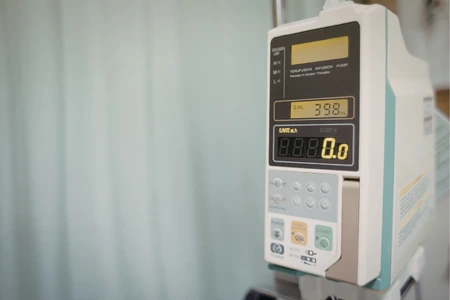
In modern hospitals across the US, UK, EU, and advanced medical centers in Asia, electronic infusion pumps (smart pumps) are the standard of care. These pumps do not measure drops; they measure continuous volume over time. Therefore, you must know how to calculate ml per hour using an iv pump calculator.
The mL/hr Formula
Infusion Rate (mL/hr) = Total Volume (mL) / Total Time (hours)
How to Calculate ML Per Hour
Example A: Total Parenteral Nutrition (TPN)
- Order: Infuse 1,200 mL of TPN over 12 hours.
- Calculation: 1,200 mL / 12 hours = 100 mL/hr.
- Result: You will set your iv rate calculator on the pump to 100 mL/hr.
Example B: Less than an Hour (Antibiotic Infusion)
What if the medication needs to be infused in 30 minutes? You must adjust the time factor.
- Order: 50 mL of Vancomycin to be infused over 30 minutes.
- Step 1: Convert minutes to hours (30 mins = 0.5 hours).
- Step 2: Apply the calculate iv flow rate ml hr formula: 50 mL / 0.5 hr = 100 mL/hr.
By understanding the infusion flow rate calculator mechanics, clinicians can program syringe drivers and volumetric pumps accurately, preventing dangerous under-dosing or lethal fluid overload.
Quick Reference: IV Infusion Formulas Table
Bookmark this page to keep these essential infusion calculator formulas at your fingertips.
| Calculation Type | Formula / Equation | Primary Use Case |
|---|---|---|
| Body Weight Dosing | Weight (kg) × Dose (mg/kg) | Pediatrics, critical care meds |
| mL/hr Rate (Pump) | Total Volume (mL) ÷ Total Time (hr) | Electronic IV pumps |
| Drip Rate (Gravity) | [Volume (mL) × Drop Factor] ÷ Time (min) | Manual IV drips without pumps |
| Liquid Dose (Vial) | (Desired / Have) × Volume | IV pushes, drawing up meds |
| Infusion Time | Total Volume (mL) ÷ Rate (mL/hr) | Estimating when a bag will empty |
Pro Tips & Common Calculation Mistakes
Even with the best iv drip dosage calculator, human errors occur. Keep these safety tips in mind:
- Pound to Kilogram Confusion: The #1 pediatric medication error globally. Always divide pounds by 2.2 to get kilograms. Never calculate a dose based on pounds.
- Minute vs. Hour Mix-ups: Gravity drips use minutes (gtt/min). IV pumps use hours (mL/hr). Do not mix up the time measurements!
- Ignoring the Drop Factor: Not all IV tubing is the same. Assuming a 15 gtt/mL drop factor when you actually have a 20 gtt/mL set will significantly alter your drip rate formula results.
- Pump Programming Errors: "Smart pumps" are only as smart as the person programming them. Always double-check your zeroes (e.g., 10.0 vs 100).
Frequently Asked Questions (FAQs)
1. What is the difference between an IV pump and a gravity drip?
2. How do I use a mcg kg min calculator?
3. How do I calculate the infusion time of an IV bag?
4. What does "fluid resuscitation" mean for IV calculations?
5. Can I use an online iv infusion rate calculator in clinical practice?
Conclusion: Mastery of IV Calculations Saves Lives
Whether calculating a standard saline drip or a highly sensitive cardiac medication, mastering the math of IV therapy is essential for patient safety. By understanding the core equations—from the ml hr formula to the drip factor equation—you ensure precision in your clinical practice.
Remember, calculations do not have to be intimidating. By breaking them down into logical steps, knowing your tubing equipment, and double-checking your math, you can deliver exceptional patient care.